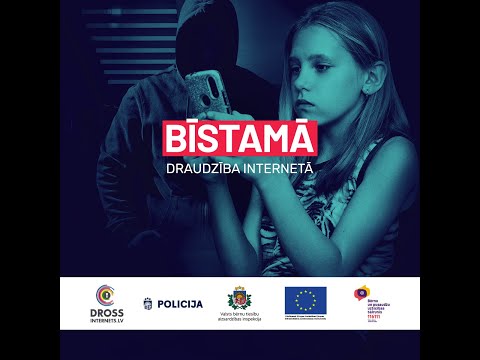
Cyber bullying
Children and Youngsters / Online safety / Cyber bullying
Emotional harassment – “cyber-bullying is use of information and communication technologies, e.g. e-mail, mobile phone, bleeper text messages, instant messaging (IM), someone’s private website or private survey websites that defame someone in order to support deliberate, repeated and hostile behaviour by an individual or a group, that is intended to harm others.” Bill Belsey.
In Latvia the term cyber-bullying is often substituted by terms mobbing or emotional harassment on the Internet.
Cyber-bullying occurs when somebody:
- sends indecent, offensive or threatening messages, e-mails, photos or films;
- calls but does not speak;
- publishes indecent messages or pictures on a message board, website or chat;
- talks in an insulting way in a chat;
- pretends to be a different person and says unpleasant things in a chat, on a message board or by sending text messages;
- accesses somebody else’s accounts to intimidate this person or get him or her into trouble.
Why do people insult and harass others? There are many different reasons why people harass others. Here the adolescents have mentioned some of them.
- By harassing others, a person feels more peremptory and stronger.
- It is a means of becoming popular and famous at school.
- Because they feel shy and try to hide these feelings by intimidating others.
- Because they feel unhappy and thus try to attract attention.
- Because they have been harassed themselves.
- Harassing others is a means of expressing one’s superiority.
- They feel angry and helpless because they cannot handle their own problems.
- Because they suffer violence themselves – from their parents, foster-parents, sisters, brothers, schoolmates.
- Because they are scared of becoming victims of peer violence.
- Because they have low self-esteem and can thus feel more confident about themselves.
What can I do if I get harassed? Recommendations from adolescents who have experienced harassment.
- Block access to your profile for a user who harasses, offends or threatens you.
- If you attend the same school as the child or adolescent harassing you, try to avoid contact with him or her.
- If the person who has harassed you is nearby, slowly go away.
- Do not try to seek revenge on your offender – it will only make things worse; do not attempt to threaten or answer with a similar offence.
- Do not keep your offended feelings to yourself, seek help from people who are reliable to you, for example, your parents, friends or teachers, or call the Children’s Hotline 80006008 – the specialists will hear you out and provide you with support and help.
- If you know the person who offended you, try to talk to him or her peacefully about what happened and explain how you feel after the offence.
- Forget this incident and do what you enjoy doing!
How to avoid cyber-bullying?
Always respect others – think seriously about the information and photos you send or publish on the Internet.
Think before sending! Any information you send can become openly accessible and can be stored on the Internet for a long time.
Treat your password as your toothbrush – never give it to anyone! Only disclose your mobile number and nicknames in Skype and similar programs to your reliable friends.
Block access and report emotional harassment. Learn how to block a person from contacting you and think about who you can contact to report on the offender.
Do not answer offensive messages – when answering them, you can make everything only worse and by challenging the offender or writing back bad things, you can get yourself into trouble.
Keep the proof. Learn how to save online conversations, sent photos and other information.
Definitely tell somebody – your parents, guardians, other reliable adults or teachers, class masters or social educators, or specialists from the Children Hotline 80006008 - what has happened to you.
Do not be indifferent – if you see that somebody is being harassed, support the victim and report on what happened, because you may also need support in a similar situation!
All this advice is available (in Latvian) in unified material that you can download and print from here >>>